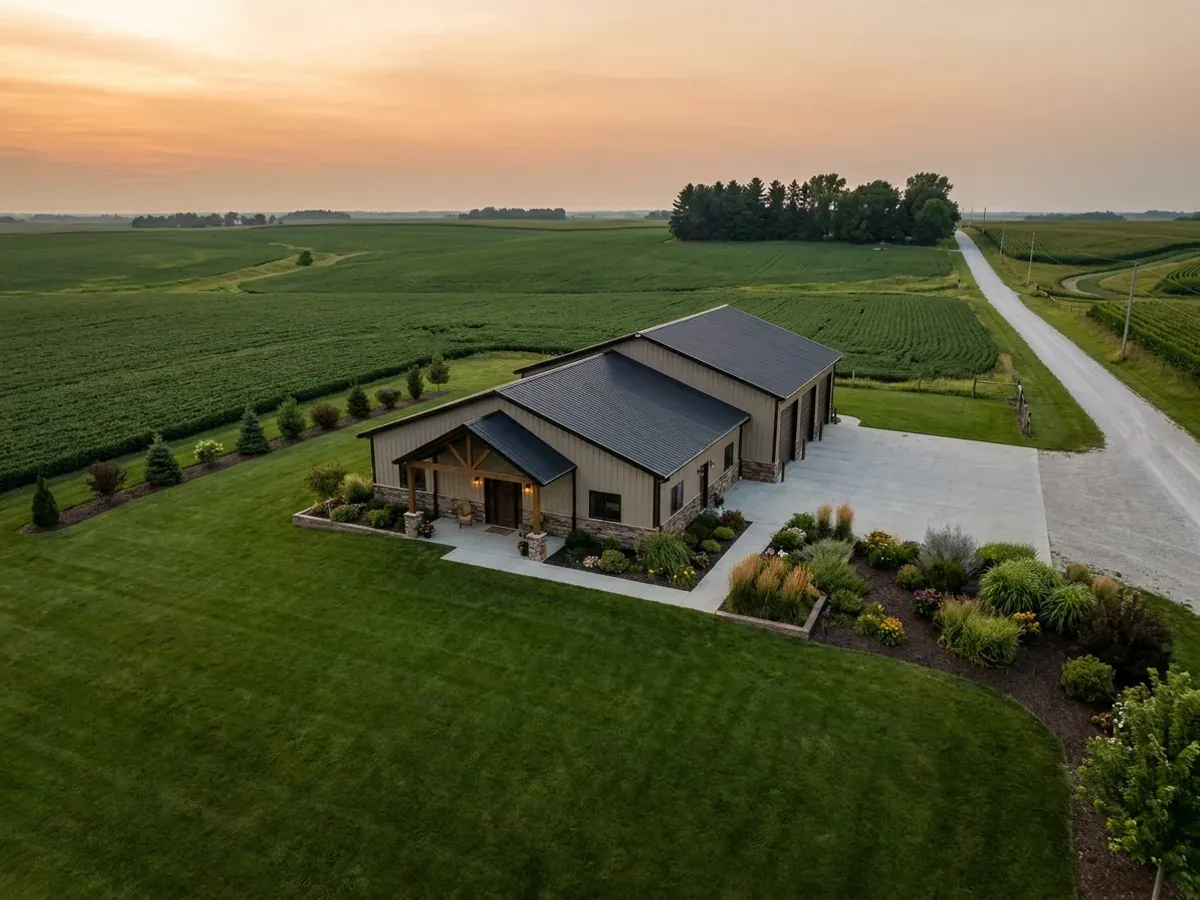
Turnkey Barndominium Builders in Iowa
Turnkey means you sign once and get keys. As barndominium builders in Iowa we take the project from raw land through the permits your parcel actually triggers, then site work, foundation, shell, rough-ins by licensed trade contractors, and interior finish, on one contract and one schedule. The gates on a rural Iowa build are not all at the building department: the septic permit comes from the county board of health, a new well needs its own construction permit, and zoning — where the county or a nearby city has it — is a separate approval again. One contract exists so one party holds that whole chain.
Turnkey Builds: how the work runs
Four stages, in this order. The sequence matters more than it looks: getting the design values, the septic answer and any permits settled before anything is fabricated is what keeps an Iowa build from stalling.
Feasibility: who has jurisdiction over your land
Before anything is drawn we establish four things about the parcel. Whether it is inside a city, inside a city's two-mile extraterritorial area, or in unincorporated county. Whether the county or city zones it, and what the district allows. Whether a building permit and inspections apply there at all. And whether the soil will take a septic system of the size the house needs. Each of those has a different answer from one Iowa county to the next.
The permit chain, in the order it bites
Septic first, because the county board of health's site evaluation and construction permit can reshape the site plan. Then the well construction permit, which Iowa requires before a new private well is drilled. Then zoning or a floodplain permit where they apply, the driveway or entrance permit from whoever owns the road, a rural address, and power. Then the building permit where your jurisdiction issues one — and its application carries a statement that the construction will meet Iowa's energy conservation requirements.
Site work, foundation and shell
Driveway and culvert, pad, footings below the frost line your jurisdiction publishes, then slab or basement, then the frame and the envelope until the building is dried in. Dried-in is the milestone that protects everything after it. Two Iowa scheduling items sit inside this stage: within ten days of starting work, the general contractor posts a notice of commencement to the State's Mechanics' Notice and Lien Registry; and the county inspects the new septic system on location before it is backfilled.
Finish, final inspections and the handover file
Insulation, drywall, flooring, cabinets and fixtures, with plumbing, electrical and HVAC by licensed trade contractors. Where your jurisdiction inspects, the job ends in final inspections and a certificate of occupancy. Where it does not, we walk a punch list with you and hand over the records a buyer or lender will eventually ask for: the drawings, the septic permit and its as-built drawing, the well permit and log, and the trade permits. In Iowa a septic system serving a home must be inspected before the property is sold, so that as-built drawing matters well beyond move-in day.
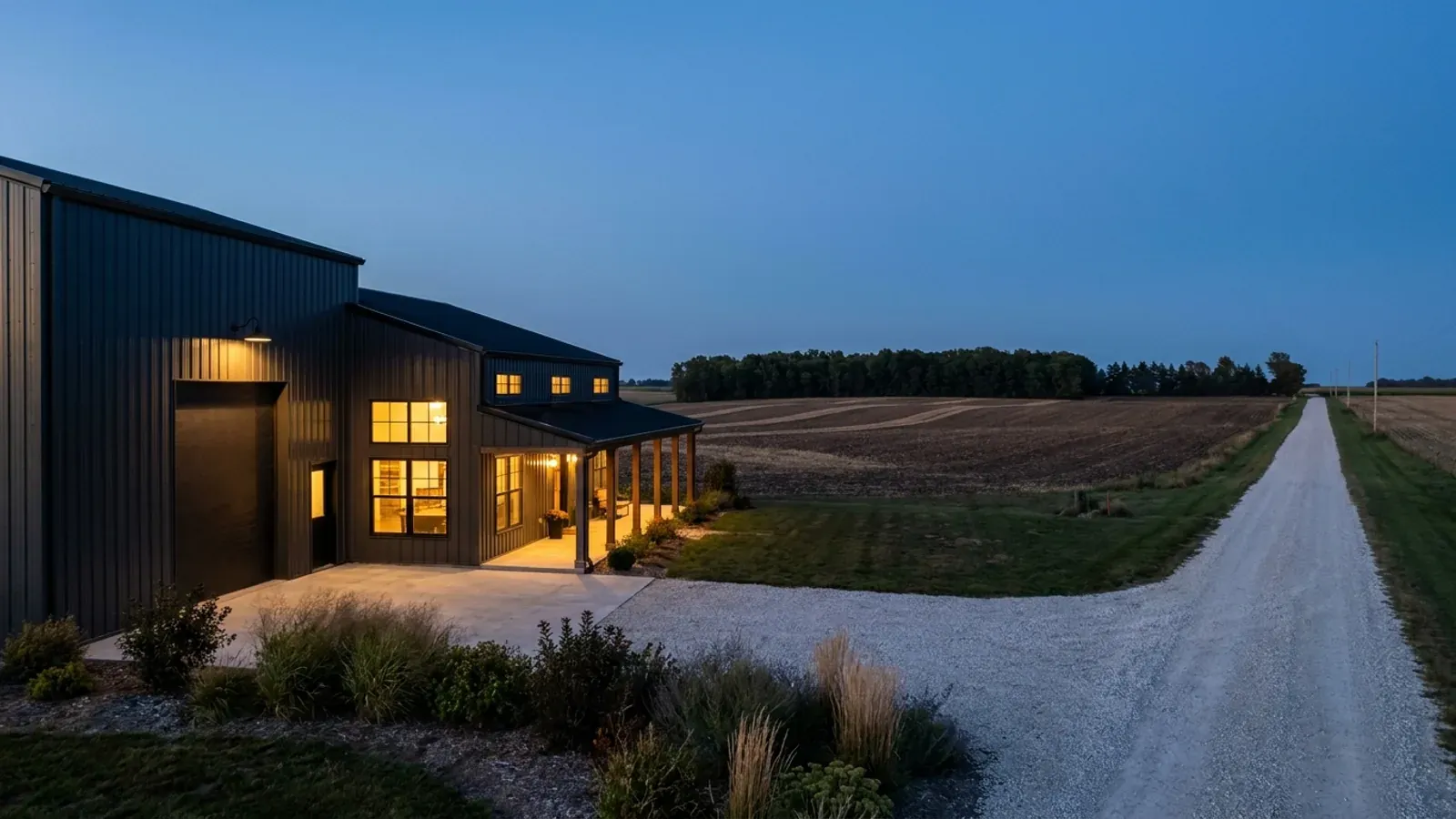
On rural Iowa land the first permit is usually for the septic, not the house
Each Iowa county board of health regulates private sewage disposal and private water supplies within its jurisdiction, and no septic system may be installed without a construction permit issued before construction starts. The county evaluates the site, the soil is tested by percolation or professional soil analysis, and the system is inspected on location before it is backfilled. A new private well needs its own construction permit. Those gates apply whether or not your county has a building code — which is why a turnkey build starts with the ground, not the floor plan.
Where we deliver turnkey builds
In Iowa the line that matters is often a city limit rather than a county line. Inside a city you usually have city zoning and a city building department; within two miles of one, its zoning can reach out to you; out in the county, some counties enforce a building code and many rural ones do not. Cross one of those lines and what changes is whether the build is inspected, who reviews the drawings, how the land is zoned, and whose snow, wind and frost values the drawings answer to. The septic permit from the county board of health and the state energy code go with you everywhere.
Barndominium builders across Iowa.
Every city and county we build in has its own answer on permits, septic and design values. The service area pages set out what each one publishes.
What actually decides the price
Square footage is the number everyone leads with, and it is rarely the one that moves a barndominium budget. These four do.
-
Site work and access
Distance from the road, the driveway and culvert, how much the pad has to be built up, and how far power has to run. On an Iowa acreage the site work is the most variable line on the whole budget, and it is the one a per-square-foot figure never includes.
-
Well and septic
A private well and septic system replace city water and sewer on most rural builds. Well cost depends on how deep the driller has to go on your parcel; septic cost depends on soil. A slow-percolating site can need a mound system rather than a conventional field, and Iowa's rule only allows conventional trenches where the soil percolates faster than 60 minutes per inch.
-
Basement or slab
A full basement is one of the biggest single swings in an Iowa barndominium budget. It adds excavation, walls, waterproofing and egress, and it can save square footage elsewhere. A slab is cheaper but needs a properly insulated, frost-protected edge.
-
Finish level
Interior finish is where two barndominiums with the same shell end up far apart: cabinetry, flooring, tile, fixtures, windows, porch and ceiling treatment. We price finish in tiers so you can see the difference line by line instead of as one number.
Turnkey Builds in Iowa: common questions
8 questions we get asked most often about building in Iowa. If yours is not on the list, ask it directly.
What does a turnkey barndominium include?
Do you build barndominiums anywhere in Iowa?
Who inspects the build if my county has no building code?
Can I build a barndominium on farmland under the agricultural exemption?
How long does a turnkey barndominium take in Iowa?
What is the Mechanics' Notice and Lien Registry?
Can you work with my own land survey and plans?
Do I have to sell my house before building?
Keep reading
The pages that answer the next question this one raises.
How Long Does It Take?
Where septic, well and building permits sit in the schedule, and why an Iowa winter moves the start date.
Read itHow to Finance a Barndominium
A single contract is also the structure lenders are most comfortable underwriting.
Read itBarndominium Cost Guide
Sourced ranges for the finished tier, so a quote has context.
Read itReady to put turnkey builds against a real plan? Start there and the rest follows.
Tell us about the land
Tell us where the parcel is and what you want on it, and we will come back with who has jurisdiction, what the land needs before it can be built on, and a realistic budget range. Starting the survey costs nothing.